

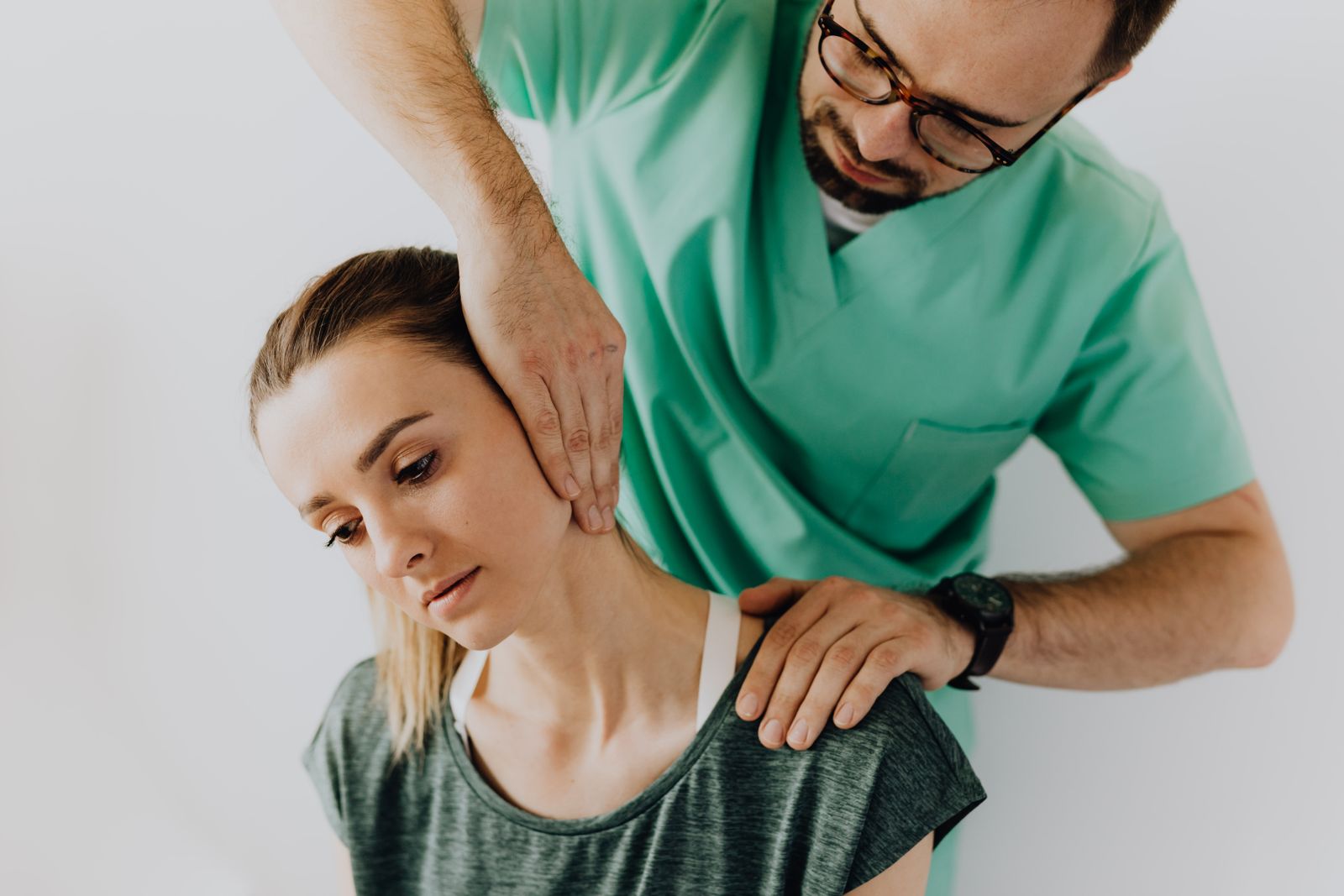
Neck pain and stiffness are now everyday complaints in Lahore — long hours at a computer, endless scrolling on the phone, and poor sleeping positions all take their toll on the neck. The good news is that neck pain is very treatable, and targeted physiotherapy at home can ease the pain, free up the stiffness, and stop it becoming a recurring problem — usually without scans, medication, or a clinic visit.
Common causes of neck pain
Most neck pain is mechanical, meaning it comes from the joints, muscles, and discs of the neck rather than anything sinister:
- Postural strain — holding the head forward over a laptop or phone for hours (“tech neck”), which overloads the neck muscles and joints.
- Muscular tension and knots — from stress, overwork, or a poor desk setup, often felt across the shoulders and base of the skull.
- Cervical spondylosis — age-related wear of the neck joints and discs, causing stiffness and aching, especially in the mornings.
- A trapped or irritated nerve — from a bulging cervical disc, which can send pain, pins and needles, or weakness down the arm.
- “Woke up with a stiff neck” (acute torticollis) — a sudden, painful spasm that locks the neck to one side, usually settling quickly with the right treatment.
- Whiplash — after a car accident or sudden jolt, causing pain and stiffness that responds well to early, guided movement.
Symptoms worth getting assessed
- Neck stiffness or aching that lingers or keeps returning
- Pain spreading into the shoulders, upper back, or between the shoulder blades
- Headaches that start at the base of the skull (cervicogenic headaches)
- Pins and needles, numbness, or weakness travelling down an arm
- Difficulty turning your head to drive, or reduced movement
How physiotherapy treats neck pain
The modern approach to neck pain is to keep it moving and address the cause, not to rest it in a collar. Home physiotherapy with Dr. Faizan focuses on:
- A thorough assessment — pinpointing which joints, muscles, or nerves are involved, and screening for the rare problems that need onward referral.
- Hands-on treatment — gentle joint mobilisation and soft-tissue techniques to reduce pain and restore movement quickly.
- Nerve-related care — where arm symptoms are present, specific techniques to settle the irritated nerve and free up its movement.
- Posture and ergonomic advice — practical changes to your desk, screen height, and phone habits that remove the daily load driving your pain.
- Strengthening the neck and upper back — the deep neck and shoulder-blade muscles that hold your head well and prevent recurrence.
- A simple home programme — a few effective exercises you can keep up between visits.
The UK’s NHS notes that most neck pain improves within a few weeks by keeping active, adjusting posture, and using gentle exercises — and that staying still or resting too much tends to prolong it. A structured physiotherapy plan is the evidence-based way to recover faster and stay well.
”Tech neck”: the desk-worker’s problem
For every centimetre the head drifts forward from a neutral position, the load on the neck rises sharply. Hours in that position — at a laptop, in meetings, or bent over a phone — leave the joints stiff and the muscles fatigued, which is why so many professionals in Lahore develop nagging neck pain and tension headaches. Physiotherapy fixes this at the source: by improving how your workstation is set up, breaking up long static postures, and strengthening the muscles that support your head, so the pain stops returning every working week.
What to expect from a home visit in Lahore
On the first visit, Dr. Faizan assesses your neck movement, the affected joints and muscles, and any nerve involvement, then explains clearly what is causing your pain. Treatment starts the same day, and you leave with a plan and a workstation you can actually use. Home visits cover DHA, Gulberg, Johar Town, Model Town, Bahria Town and most of Lahore — ideal when a stiff, painful neck makes driving to a clinic the last thing you want to do.
When to seek urgent help
Get prompt medical attention if your neck pain follows a significant accident or fall; if you have progressive weakness, numbness, or clumsiness in the arms or legs; if you develop problems with balance, walking, or bladder or bowel control; or if neck pain comes with fever, severe headache, or feeling generally unwell. These are uncommon but need timely assessment.